
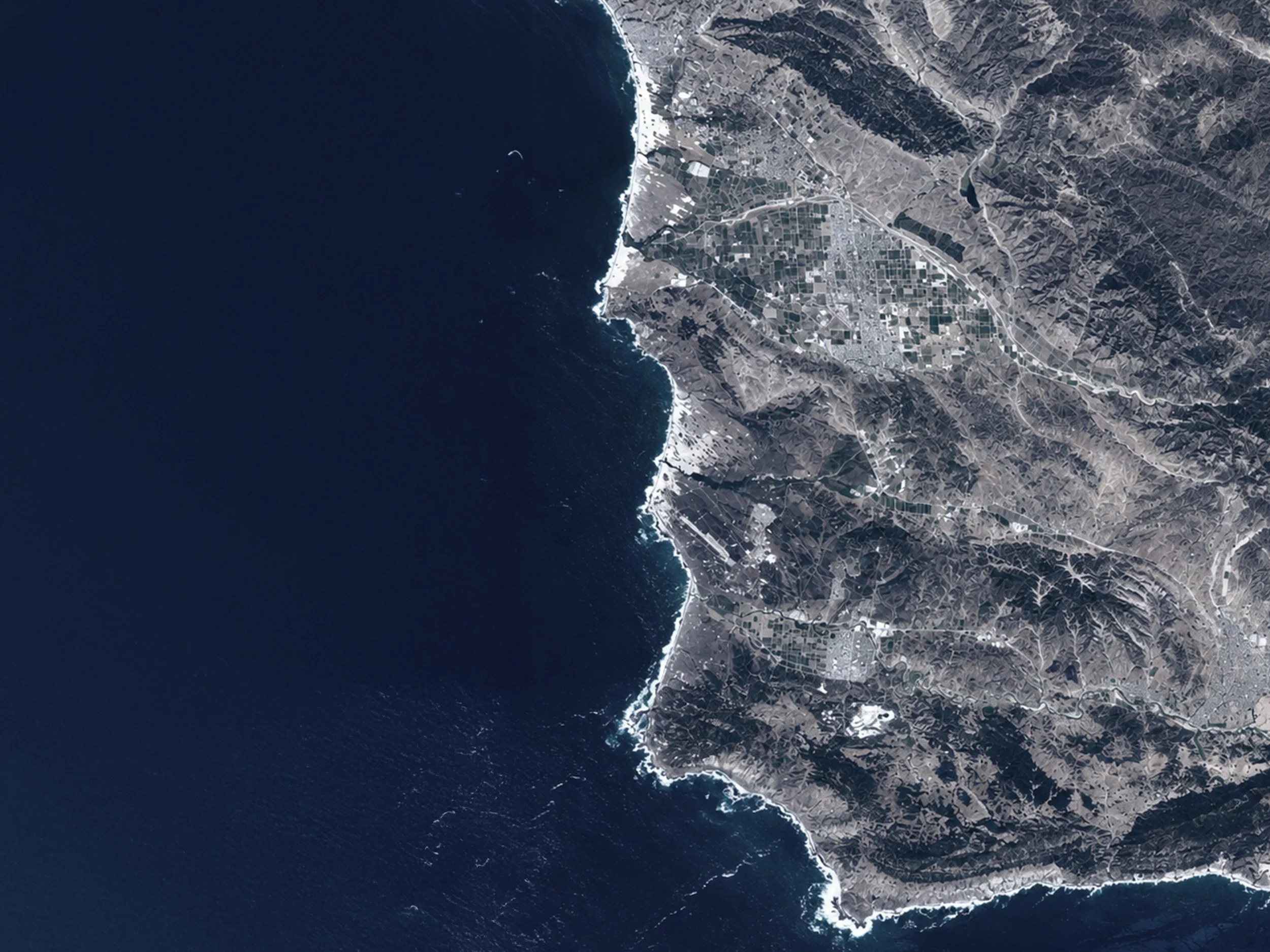
The
Satellite Coast
Research Project
The Satellite Coast research project explores the issues that Central Coast communities face as a consequence of increased commercial satellite launches at Vandenberg Space Force Base, including impacts on cultural resources and spiritual practices of communities indigenous to the area, environmental and public health-related concerns caused by noise and emissions, and socio-economic effects on nearby towns.
● About The Satellite Coast Project
Community-Engaged Research.
The Satellite Coast research project explores how this new Space Age is taking shape by investigating the impacts of commercial satellite launching on Lompoc’s diverse communities who work and live adjacent to launch infrastructure. Three case studies engage Lompoc community members and regional organizations from historically underrepresented groups who are often not consulted about major science and technology projects: farmworkers who own, operate, and work in fields adjacent to launch complexes; members of federally recognized and unrecognized Chumash tribes and bands of the region; and people who are incarcerated in the Lompoc Federal Correctional Institution.
-
In 2021 government officials in California heralded a new Space Age for the state’s central coast. A new commercial space master plan identified Vandenberg Space Force Base in Lompoc as the prime location for a rapidly expanding industry of rocket launches and satellite deployments. In 2022 commercial space companies affiliated with the plan were awarded over $55 million in tax credits, with an anticipated regional economic impact of $6 billion over the next decade. The heavily subsidized plan, which is well on its way to lift off, has prioritized economic impact factors, leaving communities outside of the narrow scope of Vandenberg’s current and future workforce largely overlooked.
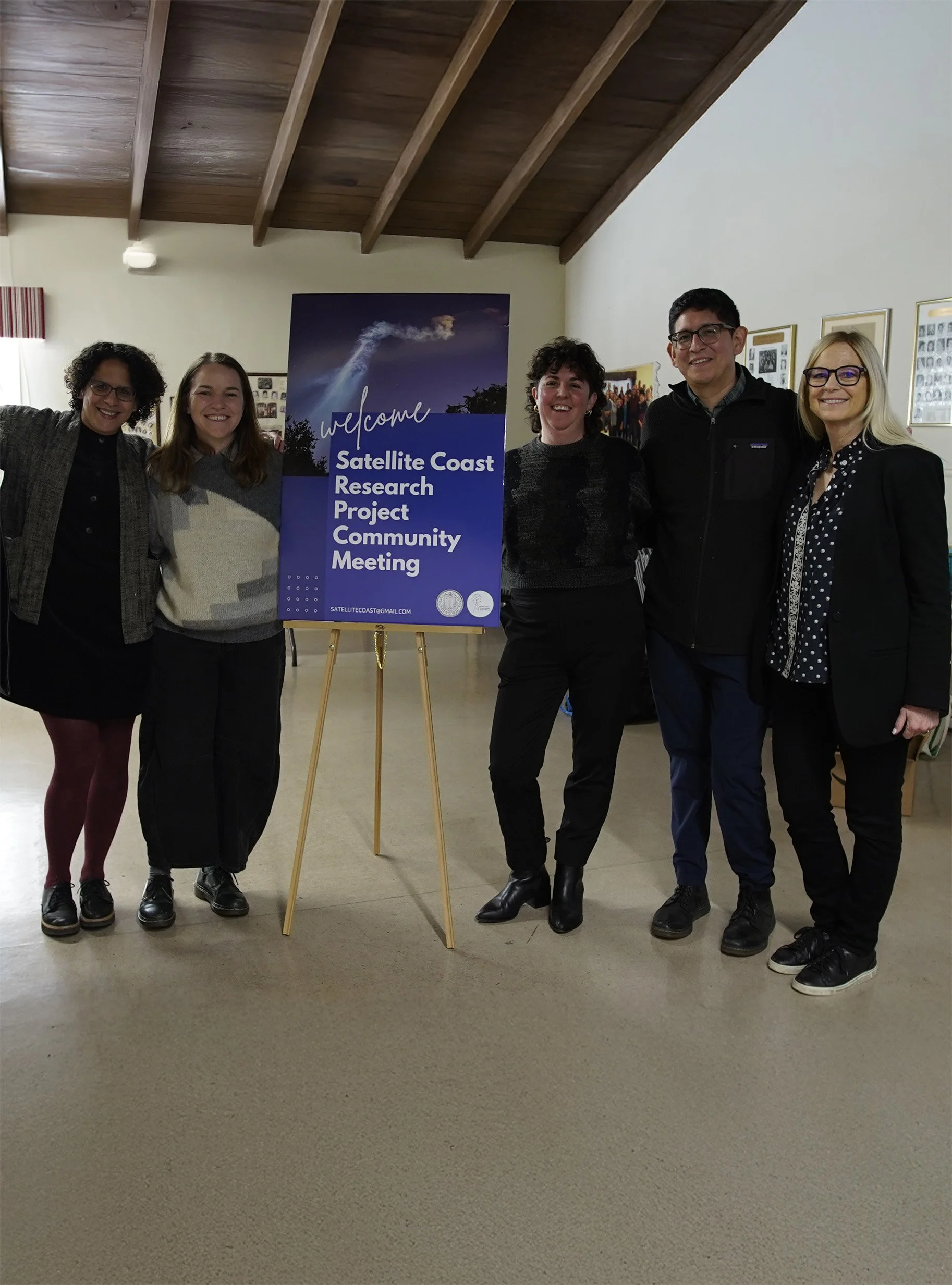
● A Historical Launch Site: Vandenberg Space Force Base
Satellite Coast is a collaborative research project investigating the impacts of increased commercial satellite launching from the Vandenberg Space Force Base on the adjacent community of Lompoc, California.
The Satellite Coast Research Project is grounded in three case studies that center the perspectives of key constituencies: Indigenous survivors, agriculture workers, and persons in the corrections system, who are often overlooked in the planning and development of large-scale infrastructural projects, such as the transformation of Vandenberg Air Force Base into an highly active spaceport.
Local Communities and Case Studies
Farmworkers
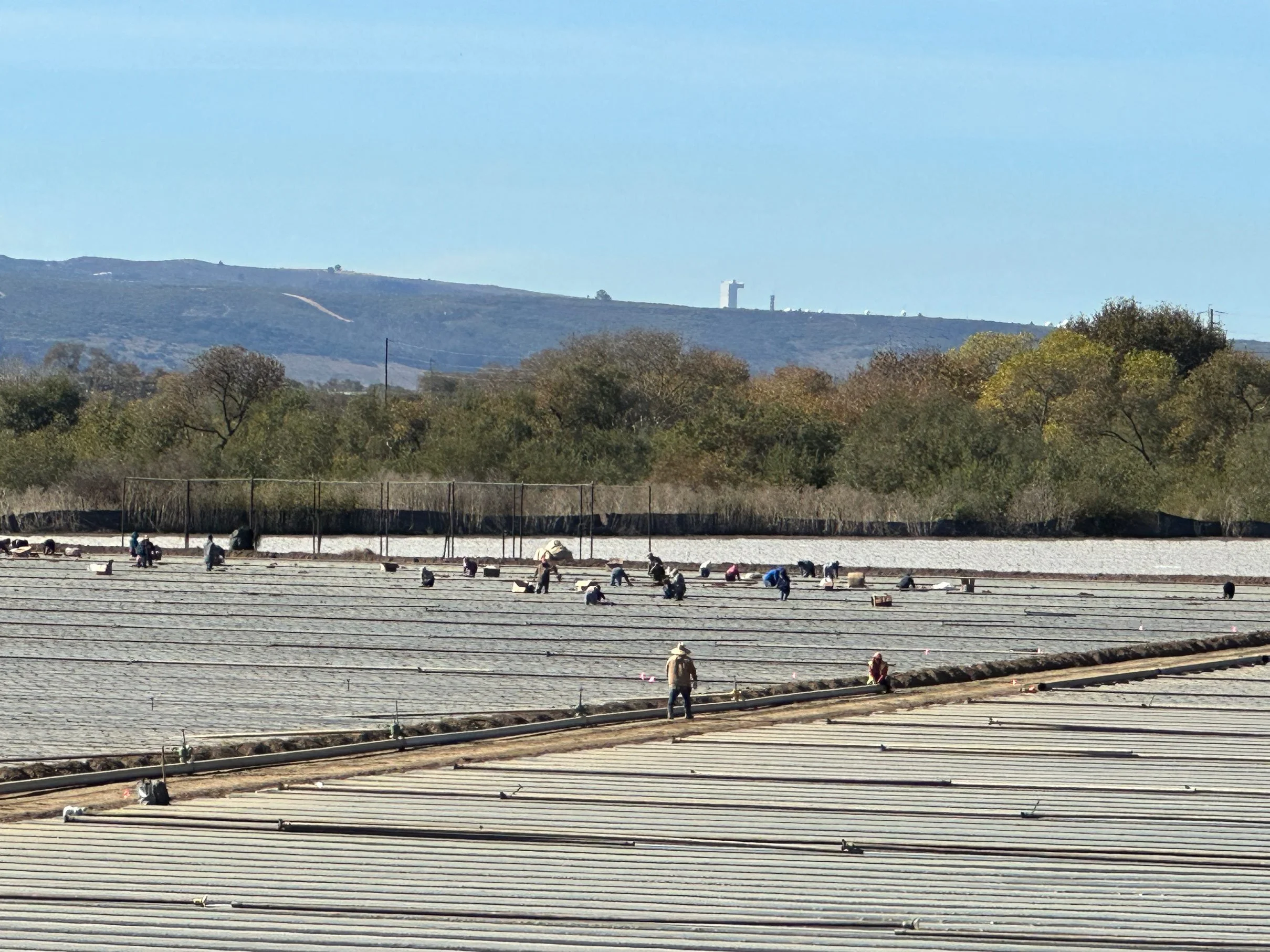
This case study examines the overlooked intersection between the California Central Coast's agricultural community and the burgeoning aerospace industry centered at Vandenberg Space Force Base. While frequent satellite launches signal technological progress, their impact on the immigrant farmworkers essential to the nation's food supply remains largely unexamined. Utilizing ethnographic methods and in-depth interviews with 50 farmworkers, this research centers the voices of those working the land beneath the flight paths. The study investigates how these essential workers perceive the environmental, economic, and social consequences of space exploration—ranging from potential impacts on soil and health to the symbolic significance of these launches in their daily lives. By identifying gaps in communication and information accessibility, the project aims to foster a more inclusive understanding of regional development and ensure farmworker perspectives are integrated into future policy and planning.
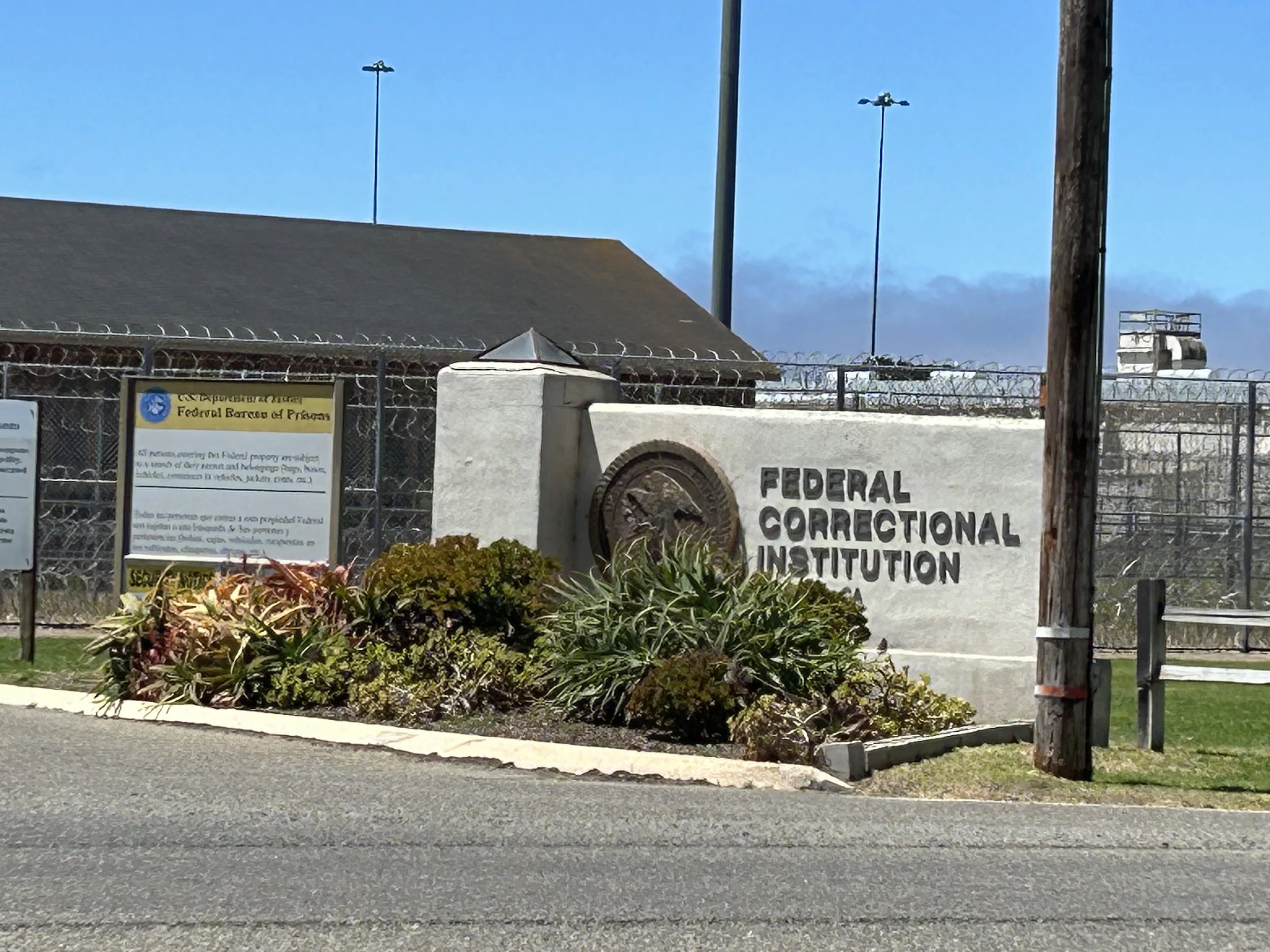
Incarcerated Persons
This case study investigates the experiences and perspectives of men incarcerated at the Federal Correctional Complex in Lompoc (FCC Lompoc) relative to the commercial satellite launches conducted at the adjacent Vandenberg base. Drawing on critical carceral studies and STS, the project, led by Co-PI Wasow, takes the spatial and historical adjacency of two federal institutions — a prison complex and a launch complex — as its analytical frame. Through written exchanges and periodic in-person meetings, the project brings incarcerated participants into STS scholarship as producers of knowledge about satellite launching, rather than only as the "testing ground" for new technologies.
Chumash Communities
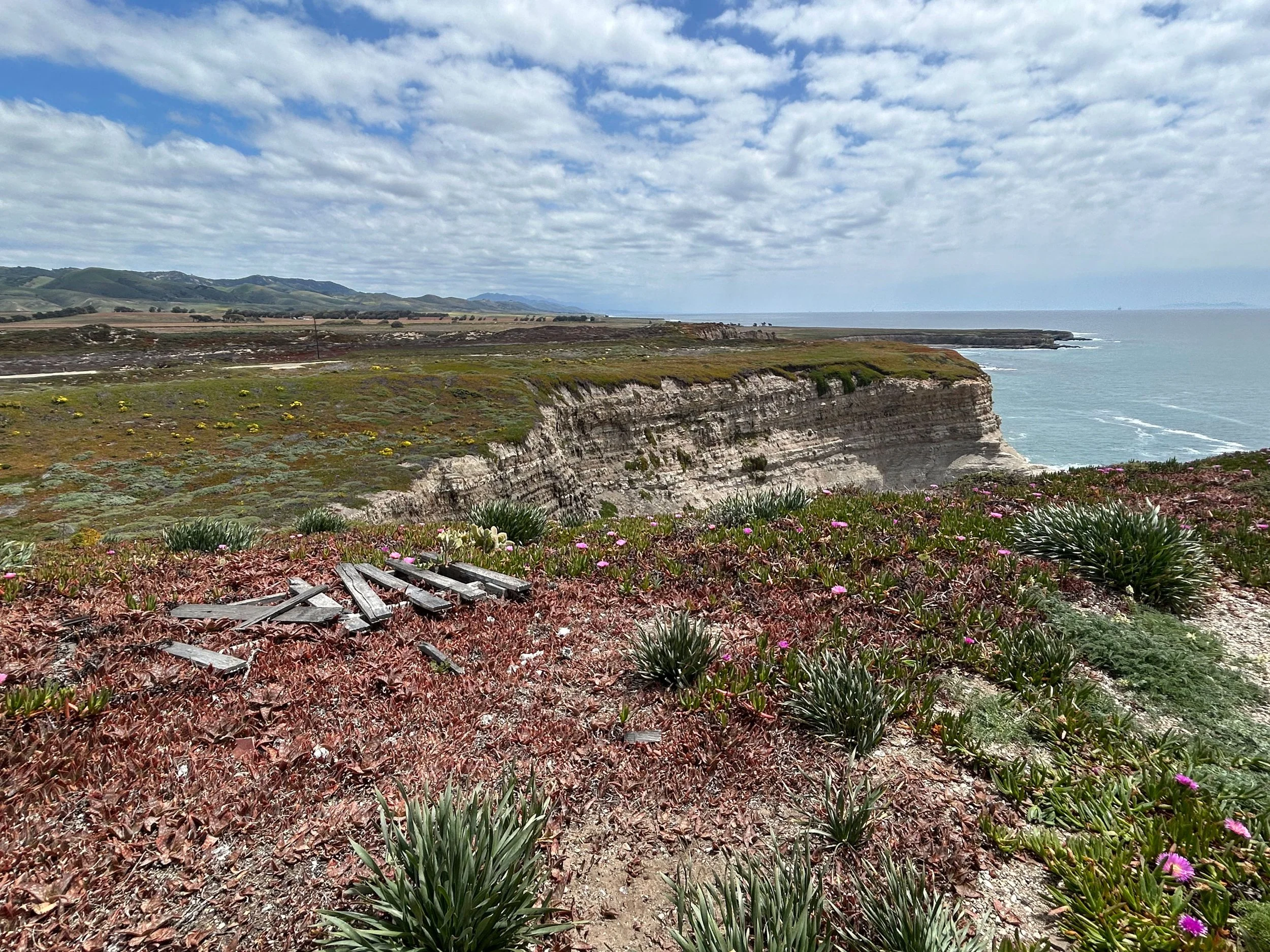
This case study collaborates with federally recognized and unrecognized Chumash communities in the Lompoc area to investigate the social, cultural, and environmental impacts of commercial satellite launching at Vandenberg. Combining focus groups and interviews with archival and historical research into the archaeological excavation of Chumash sites on the base, the project engages Indigenous knowledge, cosmologies, and lived experience of regional aerospace infrastructure alongside Chumash partners. Building on historical commentaries by Chumash leaders and recent NOAA partnerships around the Chumash marine sanctuary, it surfaces perspectives often overlooked in STS scholarship and rethinks sociotechnical relations of adjacency, diversity, and cosmology in the expanding commercial space economy.
In 2025, at Vandenberg, there were
More than
70 Launches
Working alongside community partners, the project uses interviews, focus groups, and correspondence to document how residents understand and respond to the rapid expansion of satellite launching in their region. These stories surface the lived realities behind infrastructure often seen as distant or abstract, revealing how noise, emissions, labor, and land use are experienced on the ground.
● About Our Work
Since 2022, the Satellite Coast Research Project has brought together an interdisciplinary team of scholars, filmmakers, artists, podcasters, and activists to explore satellite and telecommunications infrastructure, aerospace, digital media, and carceral systems.
● Contact
Request Information
Please reach out and let us know if you have questions or would like to engage with our research team. Whether you’re a community member, researcher, educator, or an organization, we would love to hear from you.