● Chumash Communities
Case Study
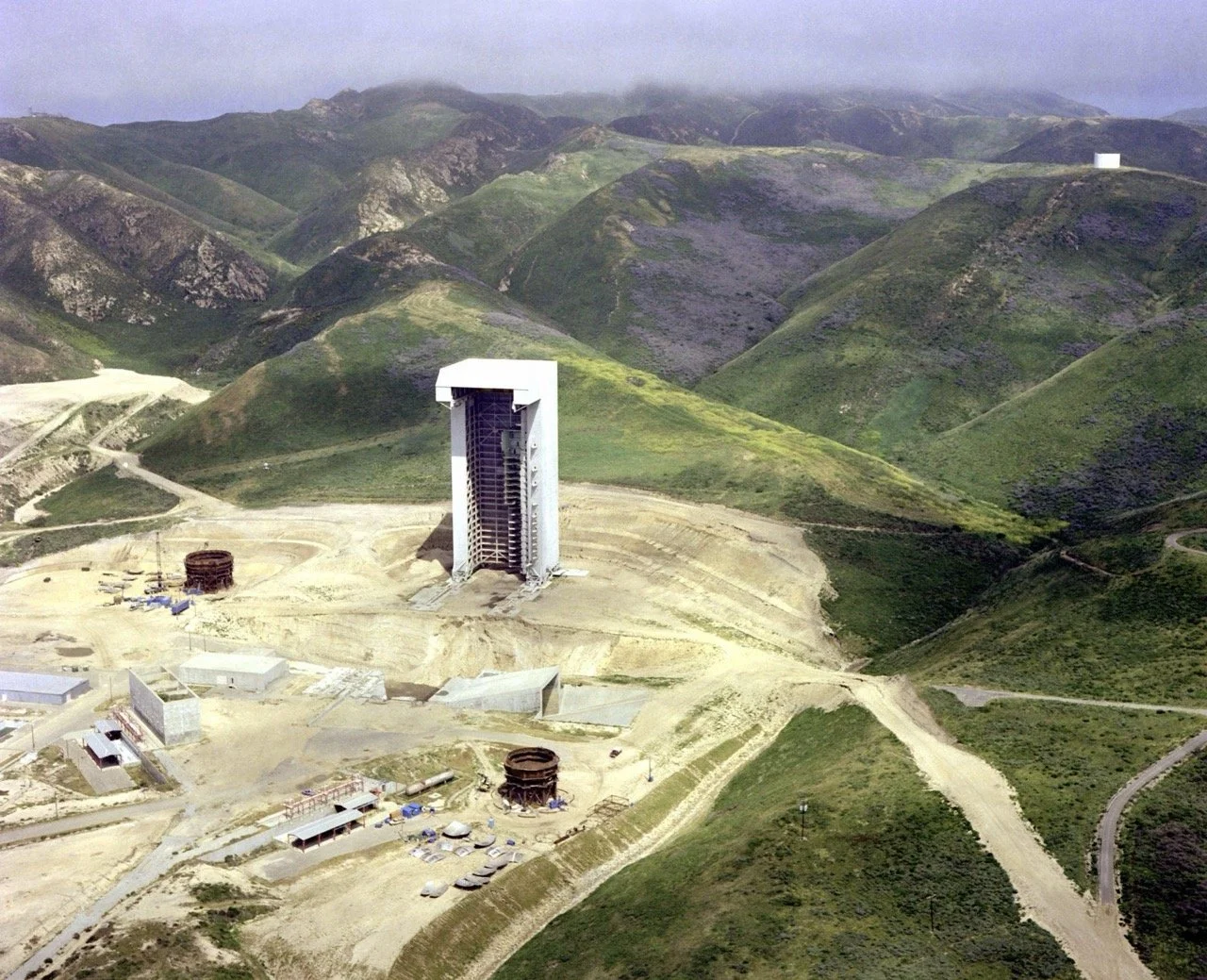
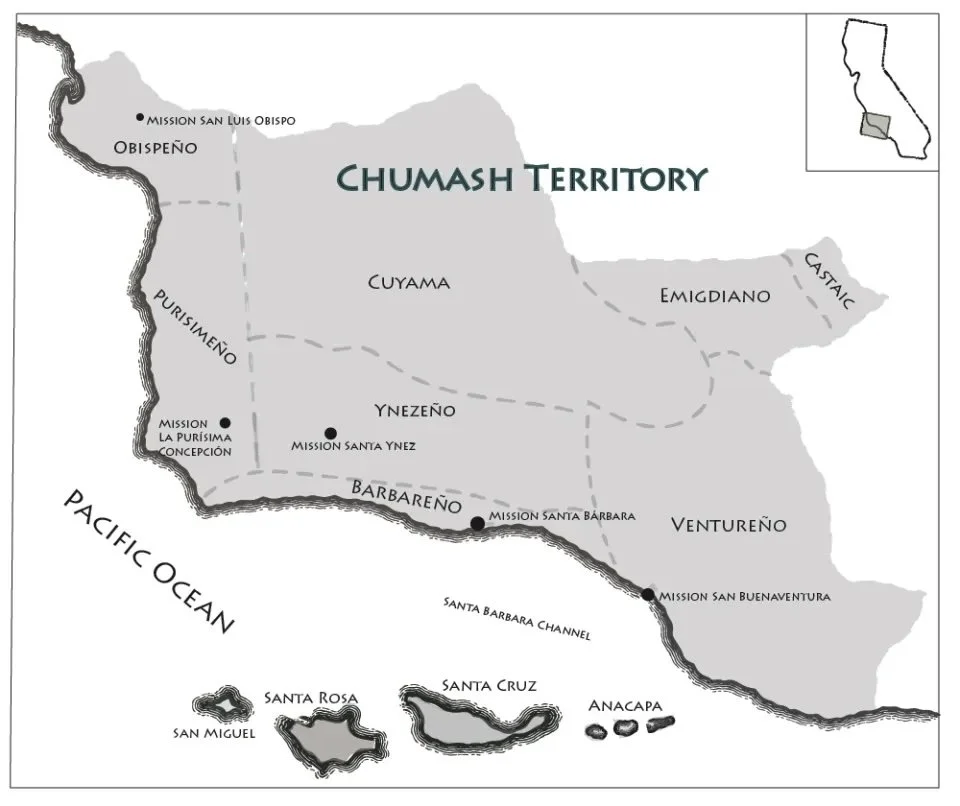
This case study collaborates with leaders of federally recognized and unrecognized Chumash communities in the Lompoc area to investigate the social, cultural, and environmental impacts of commercial satellite launching at the Vandenberg base. As Indigenous people of the Lompoc area, Chumash descendants hold experiences, knowledge, and cosmologies — of regional lands and wildlife, oceans, and skies — that inform their distinctive responses to aerospace infrastructure and place the activities of the base in historical and ecological contexts that national agencies cannot supply.
Chumash Perspectives
While the Santa Ynez Band of the Chumash Indians has had an official consultative relationship with Vandenberg, federally unrecognized Chumash bands have often been overlooked. This study sets out to engage both groups, treating the recognition asymmetry itself as part of the sociotechnical story.
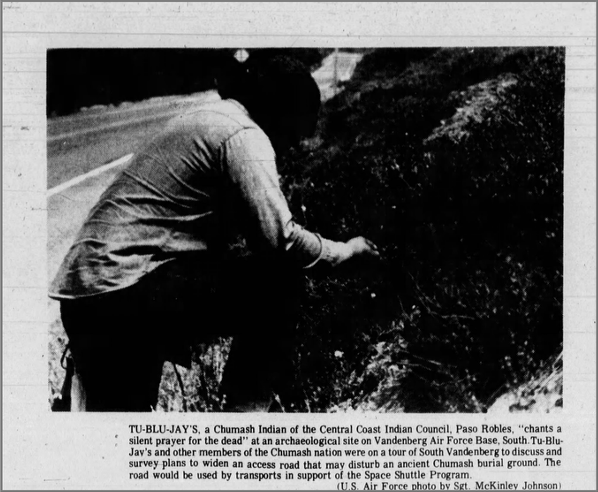
The project pursues three interwoven research strands. First, an ethnographic strand: focus groups conducted at locations chosen with Chumash partners, supplemented by post-launch workshops near Vandenberg that allow participants to share perspectives in the immediate aftermath of a launch. Discussion questions are circulated in advance, and preliminary findings are returned to participants for input and refinement before any public dissemination. Second, an archival and historical strand: research into the long history of archaeological excavations of Chumash sites at the Vandenberg base, including the documentary record of how military and aerospace activities have intersected with cultural-resources management, repatriation, and the disturbance and study of Indigenous landscapes since the mid-twentieth century. Third, a synthetic strand that brings the contemporary ethnographic data into conversation with the archival record, asking what continuities and shifts the recent commercial-launch boom marks in a longer history of Chumash relations with state, military, and aerospace actors at this site.
The case study builds on prior commentaries by Chumash leaders and writers (Anderson 1998, 1999), Dwayne Day's historical work on the Air Force-Chumash relationship at Vandenberg (Day 2012), and the recent collaboration between NOAA scientists and recognized and unrecognized Chumash communities to designate a Chumash marine sanctuary off the central California coast (Peavey-Reeves 2022). NOAA scientists have shared methodological insights with PI Parks that inform the project's collaborative protocols. Trust-building, culturally sensitive data collection, and shared analytical authority are treated as substantive research commitments, an approach refined through PI Parks's prior NSF-supported STS research with members of the Blackfeet Nation (Parks et al. 2023).
The case study aims to contribute to STS scholarship in three ways. It surfaces Chumash perspectives often overlooked in the discipline's discussion of space and aerospace. It joins the work of scholars like Day in combining expertises not typically brought into contact, including Indigenous cosmologies, military and aerospace history, archaeological research, and contemporary commercial-space studies, to think more reflexively about sociotechnical relations of adjacency, diversity, and cosmology. And it explores a model for collaborative research with Indigenous communities to understand localized dimensions of the expanding global commercial space economy, where the impacts of orbital infrastructure are felt unevenly on the ground.