
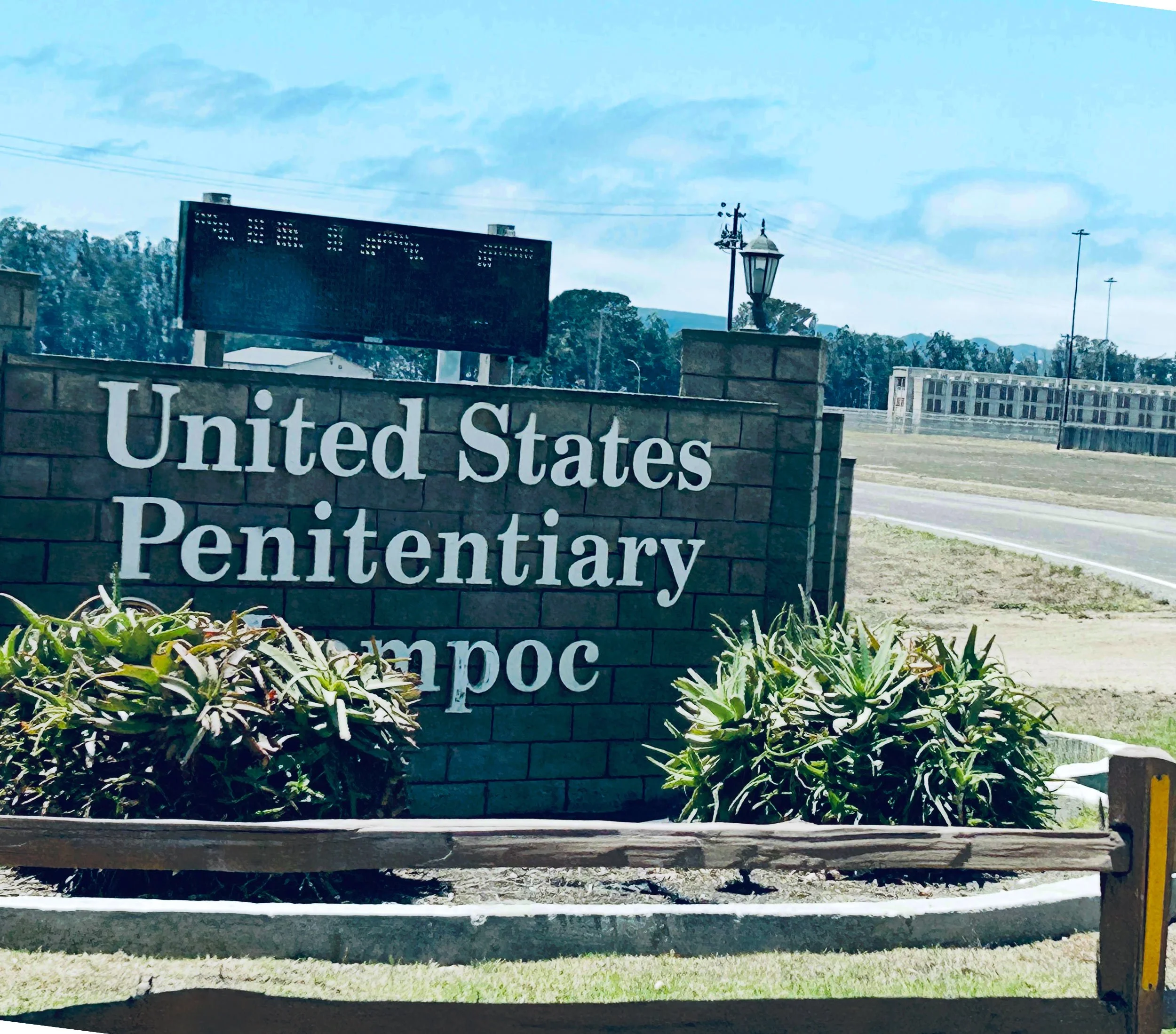
● Federal Correctional Complex
Case Study
This case study examines the impacts of increasing commercial rocket launches from Vandenberg Space Force Base (VSFB) on people incarcerated at the Federal Correctional Complex (FCC) Lompoc. Located approximately 8–12 miles from Space Launch Complexes 4 and 6, FCC Lompoc currently incarcerates more than 3,000 people and is among the communities living closest to what is being planned as one of the world’s fastest-growing commercial launch sites. Yet despite this geographic proximity, people incarcerated at FCC Lompoc have been largely absent from scholarship, environmental review processes, and public discussions concerning the impacts of increasing launch activity. Rather than treating incarceration simply as a backdrop to aerospace development, this case study investigates how expanding launch infrastructure reshapes everyday life, environmental experience, public participation, and knowledge production within one of its closest, and least-heard, adjacent institutions.
A Landscape of Confinement
This study is grounded in the observation that on this site there is a juxtaposition of carceral infrastructures and rocket launch infrastructure. FCC Lompoc and Vandenberg Space Force Base are not merely adjacent federal institutions, however, they are also historically intertwined.
During World War II, Camp Cooke included a prisoner-of-war camp for captured German and Italian soldiers. In 1946, the site became a maximum-security disciplinary barracks for incarcerated members of the U.S. military. In 1959, the Federal Bureau of Prisons took control of the facilities, transformed the barracks into a federal prison complex, and began incarcerating civilians convicted of federal offenses. Taken together, these successive federal uses reveal a landscape repeatedly repurposed for different forms of confinement. Rather than treating this progression as inevitable, the case study asks how successive forms of confinement became attached to this landscape and what this history reveals about changing relationships among war, punishment, federal governance, and technological development. The history raises broader questions that extend beyond Lompoc itself. Why did this landscape repeatedly become available for new forms of confinement? What political, institutional, and economic conditions made these transitions possible? Recovering these histories denaturalizes incarceration as the inevitable and permanent use of this land and opens space to imagine that its future, like its past, need not be fixed.
The case study is guided by questions for people who are, or who were formerly, incarcerated at FCC Lompoc, including:
How did you first learn about rocket launches at Vandenberg Space Force Base (VSFB)? What do you remember about your first reactions or impressions?
What do you notice, hear, feel, and see during launches and sonic booms?
What questions, concerns, or reflections do you have about the prison being located close to rocket launch infrastructure?
Commercial satellite launches are increasing. What do you think about this increase? What benefits or harms do you associate with it, and for whom?
Companies often describe satellite systems as expanding “connection” and “universal access.” What does “connectivity” mean to you? How does access to (or lack of) communication technology affect you?
If you had a safe and meaningful way to share your experiences or concerns about launches, who would you want to hear them (and why)? What would you want decision-makers or the public to understand?
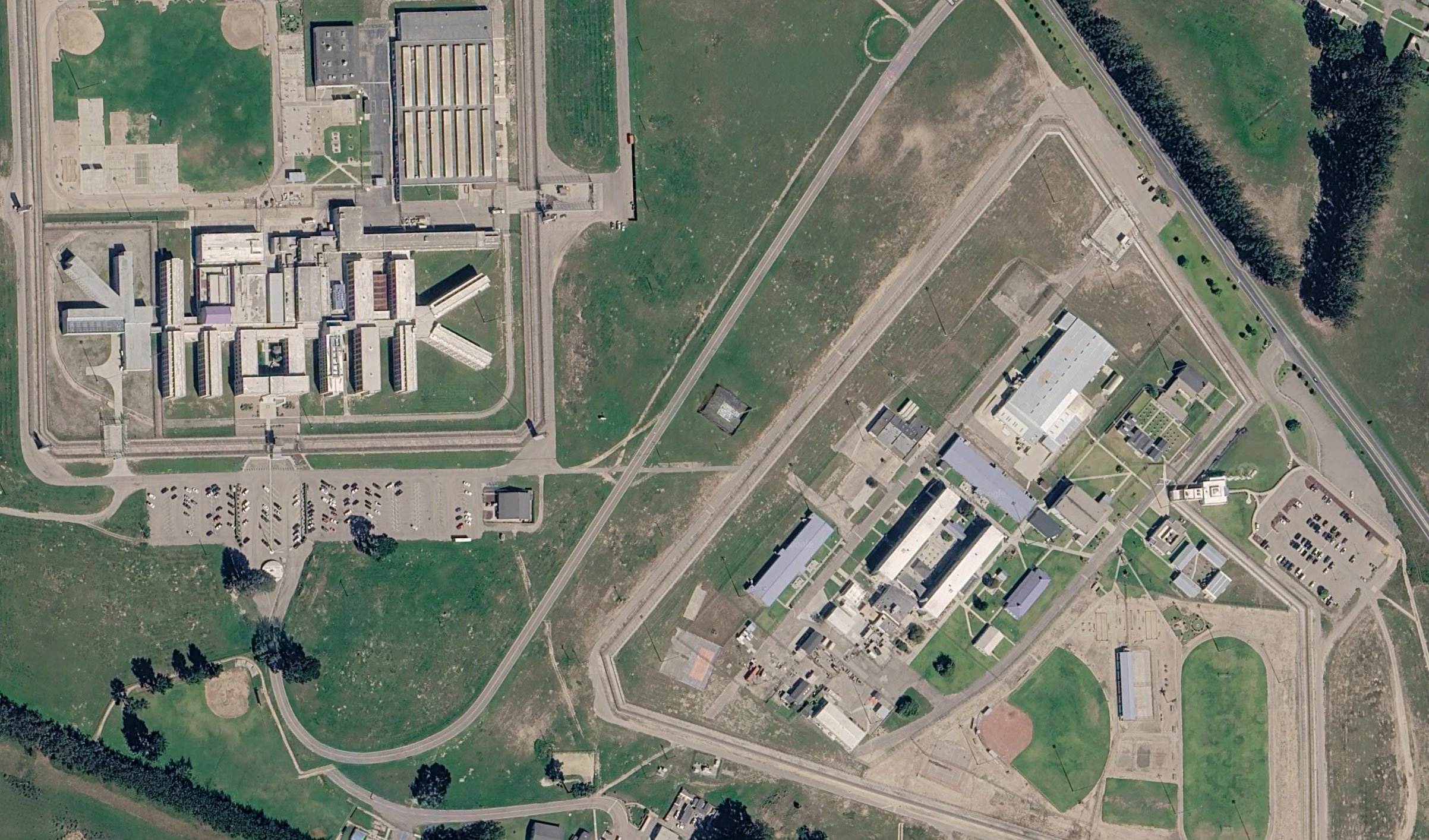
The Carceral Experience
This case study brings Science and Technology Studies into conversation with critical carceral studies, environmental justice scholarship, and community-engaged research. In doing so, it contributes to scholarship that examines the long history of interconnection between “science and technology” and “the carceral imagination” (Eglash 2019; Benjamin 2019). While people who are incarcerated have been subjected to carceral technologies and technological experimentation (Kaun and Stiernstedt 2023), they have rarely been recognized as producers of knowledge about the technologies and infrastructures that shape their lives. The STS field rarely includes people who are or were formerly incarcerated as producers of knowledge about a given technology (e.g., satellite), a given process (e.g., rocket launching), or as research collaborators (e.g., co-author of scholarship or public-facing media). Underlying the study’s questions, then, is a broader commitment to rethinking knowledge production within STS and recognizing observations, interpretations, and analyses by people who are currently and were formerly incarcerated as valuable forms of expertise.
Methodology
Methodologically, this case study combines archival research, qualitative interviewing, environmental policy analysis, political economy, and community-engaged research. Over the past two years, the research team has learned from educators, leaders, and staff at Allan Hancock College, local community organizations, environmental justice scholars, individuals formerly incarcerated at FCC Lompoc, people who have worked or taught inside FCC Lompoc, and residents throughout the Lompoc Valley and North County region. At the same time, the research team has pursued multiple ethically grounded avenues for inviting the participation of people currently incarcerated, reflecting a long-term commitment to collaborative critical inquiry with communities historically excluded from research concerning technologies that directly shape their environment and daily lives.
Although the research remains ongoing, several preliminary findings have emerged. Interviews consistently indicate that launches are experienced as substantially louder and more physically intense on prison grounds than in surrounding communities, likely reflecting both the prison’s close proximity to launch infrastructure and characteristics of the built environment.
The prison’s location also creates the unusual condition of witnessing spectacular aerospace events while living within conditions of confinement, producing a striking juxtaposition between expanding technological mobility and enforced human immobility. Preliminary findings raise questions about the distinctive sensory and psychological implications of repeated exposure to launch activity for people who are incarcerated. These questions are especially important given the disproportionately high rates of prior trauma and post-traumatic stress among incarcerated people. Beyond the launches themselves, the case study has identified significant procedural inequities. For example, despite living among the communities most directly affected by increasing launch activity, people incarcerated at FCC Lompoc have had limited access to Environmental Impact Statements, information concerning launch activity, and meaningful opportunities to participate in environmental review and public comment processes.